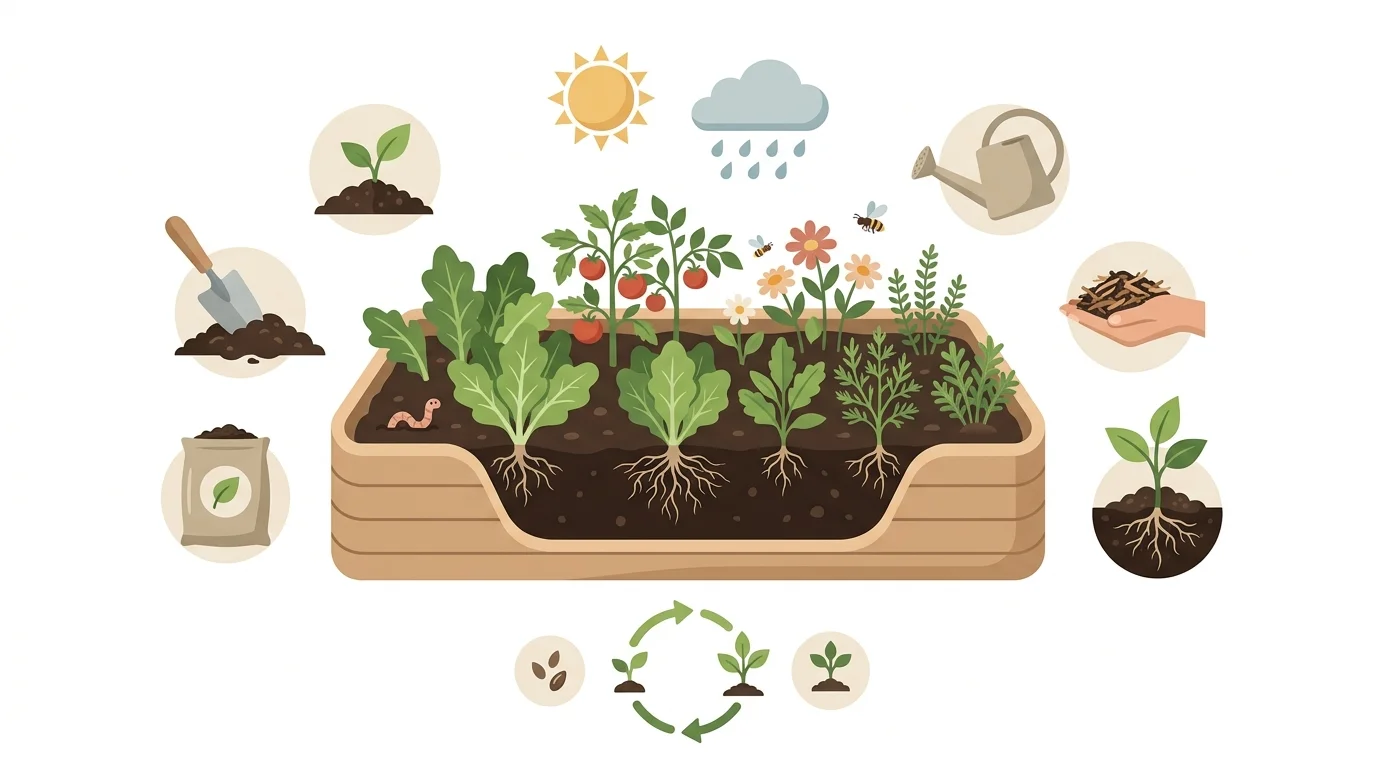
Healthy soil is the foundation of every successful garden. No matter what you grow, the condition of your soil directly affects plant growth, yield, and long-term sustainability. Soil is the foundation of every garden. Understanding what makes soil healthy gives you a massive advantage over gardeners who focus only on what’s above ground.
The good news is that improving soil doesn’t require complicated techniques. With a few consistent habits, you can maintain rich, balanced soil throughout the entire growing season.
Understanding soil types
Before you can improve your soil, you need to know what you’re working with. Soil is not a single thing — it’s a spectrum, and most gardens fall somewhere between the extremes.
- Clay soil is heavy and drains slowly. It’s rich in nutrients but compacts hard over time, turns sticky and difficult to work when wet, and cracks into chunks when dry. Clay can be productive once amended, but it needs consistent attention.
- Sandy soil is light and drains very fast — sometimes too fast. It warms up quickly in spring, which is useful for early planting, but it holds onto nutrients poorly, meaning you’ll need to feed more often.
- Loam is the ideal mix of clay, sand, and silt. It holds moisture and nutrients while draining well enough to prevent waterlogging. Most experienced gardeners aim to build their soil toward loam over time.
- Peat is acidic and moisture-retentive — great for acid-loving plants but problematic if overused. It adds little nutrition on its own.
- Chalky soil is alkaline and free-draining. It’s less common but worth recognizing — it often limits which plants will thrive without significant amendment.
The jar test
Not sure what you have? Try the jar test. Fill a glass jar about one-third with soil, top it up with water, shake well, and leave it undisturbed for 24 hours. The layers that settle out tell the story: sand sinks to the bottom first, silt settles in the middle, and clay stays near the top. The proportions of each layer show you your soil’s rough composition at a glance.
The role of soil pH
Soil pH is one of the most overlooked factors in home gardening, but it has an outsized effect on what your plants can actually use. pH is measured on a scale of 0 to 14, with 7 being neutral. Most vegetables prefer a range of 6.0 to 7.0, most flowers do best between 6.0 and 6.5, and blueberries are outliers that need a strongly acidic 4.5 to 5.5 to thrive.
When pH falls outside a plant’s preferred range, nutrients become chemically locked in the soil — present but unavailable. Iron becomes inaccessible above pH 7.5, which causes the yellowing between leaf veins known as chlorosis. Phosphorus locks up below pH 5.5, stunting root development and early growth.
How to test pH
A simple pH test kit from a garden center costs $5 to $10 and gives reliable results. If you want a rough answer without a kit, try the home test: drop a spoonful of soil into vinegar — if it fizzes, your soil is alkaline. Then test a separate sample with baking soda dissolved in water — fizzing here means your soil is acidic.
Adjusting pH
- To raise pH (make more alkaline): add garden lime and work it in during autumn. It takes several months to take full effect, so plan ahead.
- To lower pH (make more acidic): use sulfur, apply pine needle mulch, or dig in acidic compost made from oak leaves.
1. Focus on soil structure
Good soil should be loose, crumbly, and well-aerated. This allows roots to grow easily and access water and nutrients efficiently.
- Avoid compacted soil
- Mix organic matter regularly
- Loosen soil gently before planting
2. Improve drainage
Waterlogged soil can damage roots and slow plant growth. Ensuring proper drainage is essential.
Adding compost, sand, or perlite can significantly improve how water moves through the soil.
3. Feed the soil, not just the plant
Healthy soil contains microorganisms that support plant growth. Feeding the soil with organic material helps maintain this ecosystem.
- Use compost regularly
- Add natural fertilizers
- Avoid overusing synthetic chemicals
Building soil biology
What separates thriving soil from dead dirt is life. One tablespoon of healthy garden soil contains billions of bacteria, meters of fungal threads, and thousands of protozoa — all working to break down organic matter and cycle nutrients into forms plants can absorb.
- Earthworms are nature’s tillers. They pull organic matter deep into the soil, create air channels that improve drainage, and produce nutrient-rich castings that plants love.
- Mycorrhizal fungi form symbiotic networks with plant roots, extending their effective reach by up to 100 times. These networks help plants access water and phosphorus well beyond where roots could reach on their own.
To encourage soil life: add organic matter regularly, minimize tilling (which disrupts fungal networks), keep soil covered with mulch or plants rather than leaving it bare, and avoid synthetic pesticides, which can kill off beneficial biology along with pests.
Composting basics for soil improvement
Compost is the single best thing most home gardeners can add to their soil. It improves structure, feeds biology, moderates pH, and supplies a slow release of nutrients. Making your own is simpler than it sounds.
What to add
- Green materials (high in nitrogen): kitchen scraps, fresh grass clippings, coffee grounds, manure
- Brown materials (high in carbon): dried leaves, cardboard, straw, wood chips, newspaper
Aim for roughly 3 parts brown to 1 part green by volume. Too much green produces a slimy, smelly pile; too much brown slows everything down.
Composting methods
- Hot composting: turn the pile regularly and keep it moist. It heats up to 55–65°C, which kills weed seeds and pathogens. Ready in 2 to 3 months.
- Cold composting: pile it up and wait. Less effort, but takes 6 to 12 months for finished compost.
- Vermicomposting: worm bins work well for apartments and small spaces. Worms process kitchen scraps into some of the richest compost available, and the setup fits under a kitchen counter.
4. Keep moisture balanced
Too much or too little water can harm your plants. Soil should remain slightly moist but not saturated.
Mulching helps retain moisture and stabilize temperature.
5. Use mulch for protection
Mulch protects soil from drying out, prevents weeds, and improves long-term fertility.
- Wood chips
- Straw
- Grass clippings
6. Rotate crops when possible
Planting the same crops in the same place can deplete nutrients. Rotating crops helps maintain soil balance.
7. Test your soil occasionally
Understanding your soil’s pH and nutrient levels helps you make better decisions.
Simple home kits or local services can provide useful insights.
Signs your soil needs help
Soil problems often show up as plant problems, but if you know what to look for in the soil itself, you can get ahead of issues before they damage your crops. Watch for these warning signs:
- Water pools on the surface or runs off without soaking in — this points to compaction or heavy clay that needs organic matter worked in.
- Plants are stunted or yellowing despite regular watering — likely a nutrient deficiency or pH problem that’s locking out nutrients.
- Soil is hard, cracked, and difficult to dig when dry — a sign of low organic matter content and degraded structure.
- Few or no earthworms when you dig — healthy soil at the right moisture level should show worm activity. Their absence often indicates dead biology, possibly from chemical damage.
- White crust on the soil surface — this is salt buildup, usually from over-fertilizing or watering with hard water over a long period.
- Soil smells sour or rotten — a sign of anaerobic conditions from poor drainage or waterlogging. Healthy soil should smell earthy and fresh.
Common soil mistakes
- Overwatering
- Ignoring soil quality
- Using poor-quality containers
- Skipping organic matter
By improving your soil step by step, you create a stable environment where plants can thrive all season long. The effort you put into the ground pays back many times over in stronger roots, bigger yields, and plants that can handle stress on their own.