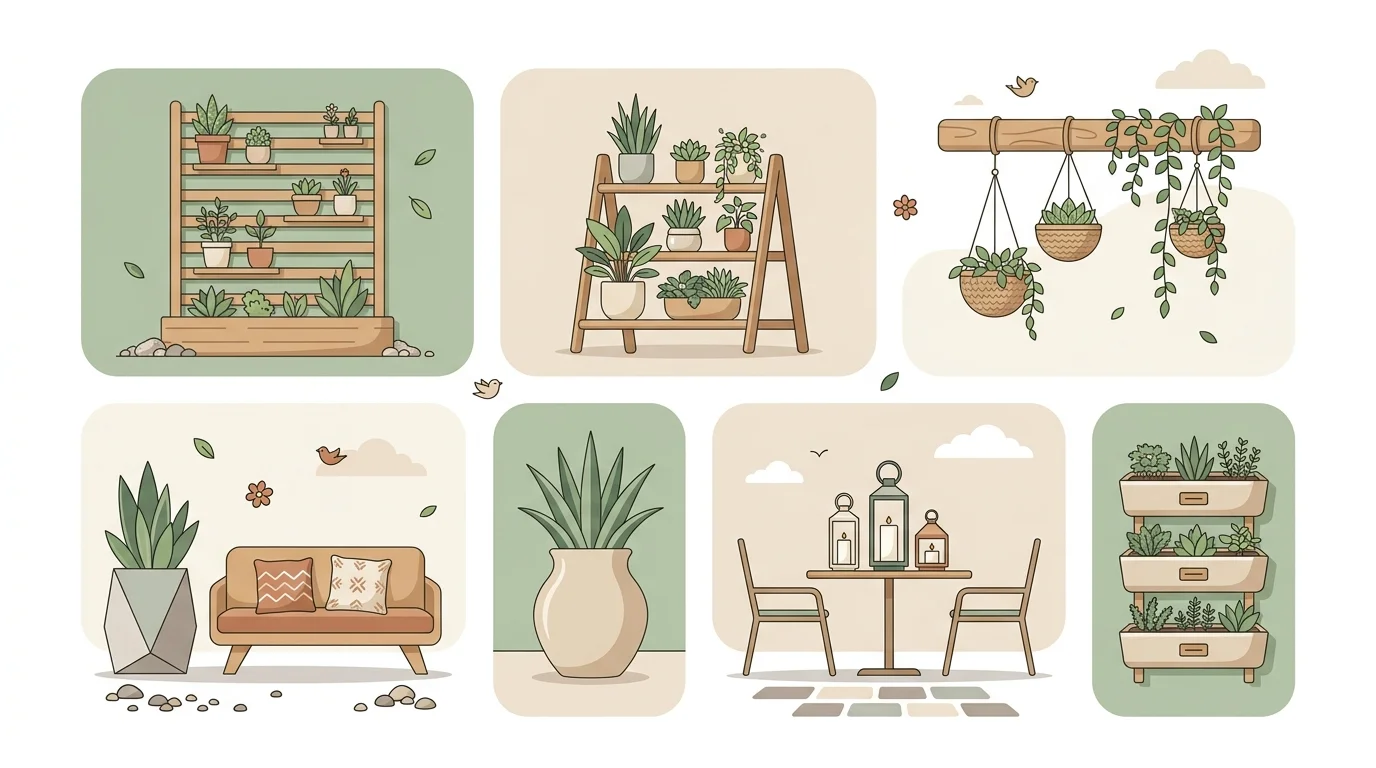
A small patio doesn't mean you have to limit your gardening ambitions. With the right layout and smart design choices, even a compact outdoor area can feel open, comfortable, and full of greenery.
The key is not to fill every inch with plants, but to create balance between greenery and open space. A well-designed patio garden should feel organized, breathable, and easy to maintain.
Patios, balconies, and small outdoor spaces have huge untapped potential. Even a 2x2 meter space can become a productive, beautiful garden — one that grows food, attracts pollinators, and gives you a genuine reason to spend time outside. The difference between a cluttered patio and a thriving one almost always comes down to planning, not square footage.
Assessing your patio conditions
Before buying a single pot, spend time understanding what your patio actually offers. Skipping this step leads to dead plants and wasted money.
- Track sunlight hours over a full day. Most patios get very different light in the morning versus the afternoon. A south-facing balcony might get six hours of direct sun while a north-facing courtyard gets none. Check at 9am, 12pm, and 4pm, then choose plants accordingly.
- Consider wind exposure. High-rise balconies and corner patios get significantly more wind than ground-level spaces. This dries soil faster, stresses leafy plants, and can knock over lightweight pots. Know your exposure before choosing what to grow.
- Check weight limits if you're on a balcony or rooftop. This is critical. Wet soil is heavy — a large 60cm pot with drainage can weigh 40kg or more. Check with building management, and distribute weight evenly across the structure rather than piling everything in one corner.
- Plan water access and drainage. How far is your nearest tap? Where does runoff go when you water? On balconies, always use saucers under pots to prevent water from draining onto neighbors below. Light-colored saucers also prevent concrete staining over time.
1. Use vertical space first
Vertical gardening is one of the most effective strategies for small patios. By growing upward instead of outward, you free up valuable floor space.
- Wall planters
- Hanging pots
- Climbing plants on trellises
Vertical gardening on small patios
Going vertical is the single biggest multiplier for small patio gardening. A bare wall or fence represents a growing surface you are not using. Here are the most practical approaches:
- Wall-mounted planters and pocket gardens. Felt pocket organizers are an underrated option — a single 1m² panel holds 15 or more individual plants and costs very little. They work particularly well for herbs, lettuce, and annual flowers.
- Trellises for climbing plants. A simple wooden or metal trellis mounted to a wall or freestanding in a large pot can support cucumbers, beans, passionflower, jasmine, and morning glory. These plants grow 1.5 to 2 meters in a single season and create a living wall of greenery.
- Hanging baskets at staggered heights. Instead of one row of baskets, hang them at two or three different levels. This creates visual layers and fills vertical space without looking flat or repetitive.
- Tiered plant stands. A-frame stands and corner shelves let you stack multiple pots in a small footprint. Each level naturally receives slightly different light, so you can place shade-tolerant plants lower and sun-lovers at the top.
- DIY pallet garden. A single wooden pallet, lightly sanded, lined with landscape fabric, and filled with potting mix becomes a wall planter that holds a dozen herbs or trailing annuals. Lean it against a wall or fence and it takes up almost no floor space.
2. Choose fewer, larger containers
Too many small pots can quickly make a patio feel cluttered. Instead, use a few larger containers to create structure and visual calm.
3. Create one focal point
Pick one main planting zone, such as a corner or wall. This keeps the rest of the patio open and prevents visual overload.
4. Stick to a consistent style
Using the same materials or colors for pots and furniture makes the space feel more cohesive and larger than it actually is.
5. Layer your plants
Arrange plants by height to create depth:
- Tall plants at the back
- Medium in the middle
- Trailing plants in front
6. Keep walking space clear
Always leave space to move around. Even a narrow pathway improves usability and comfort.
7. Use multi-functional elements
Choose items that serve more than one purpose, like benches with storage or railing planters.
Choosing plants for small patios
Plant selection is where many small-space gardeners go wrong. The right varieties make everything easier — the wrong ones mean constant battle with plants that outgrow their containers or never produce.
- Compact vegetable varieties bred for containers. Look specifically for patio tomatoes (Tumbling Tom, Tiny Tim), mini peppers, and bush cucumbers. These are bred to stay small while still producing well. Full-size vegetable varieties will outgrow pots and underperform.
- Dwarf fruit trees in large pots. A Meyer lemon in a 50cm pot will produce real lemons on a sunny balcony. Chicago Hardy fig stays compact and survives cold snaps. Compact apple varieties on dwarfing rootstocks can produce fruit in relatively small containers. These are long-term investments that get better each year.
- Trailing plants for railings and edges. Strawberries cascade beautifully from railing boxes and produce fruit all summer. Nasturtium fills gaps fast, tolerates poor soil, and every part is edible. Sweet potato vine adds bold foliage color without needing much attention.
- Fragrant plants for enclosed spaces. Scent concentrates in small patios in a way it never does in open gardens. A single jasmine plant in a corner can perfume the entire space on a warm evening. Lavender, rosemary, and sweet peas all reward enclosed planting. These also attract bees and other pollinators, which matters if you are growing vegetables nearby.
Creating ambiance on a small patio
A patio garden should be somewhere you actually want to sit. Plants alone do not create that feeling — the atmosphere around them does.
- String lights transform evening atmosphere instantly. Warm white LEDs strung along a fence or overhead create a completely different feel after dark. Solar-powered options need no wiring.
- A small solar-powered water feature — even a simple tabletop fountain or bird bath with a solar pump — adds movement and sound. In urban settings, the gentle water noise does a surprisingly good job of masking traffic and city sounds.
- Mix edible and ornamental plants for visual interest rather than keeping them separate. Purple basil planted next to orange marigolds looks intentional and designed. Chives with their purple flower heads belong in any ornamental border.
- Coordinated pot styles. You do not need all identical pots, but limiting yourself to two or three colors or materials creates cohesion. A mix of terracotta and dark grey concrete feels considered. Ten different random pot styles feels chaotic regardless of the plants inside.
- A small outdoor rug defines the "garden room" feeling more than almost anything else. It grounds the space, makes it feel furnished rather than transitional, and is easy to roll up and store.
Common patio garden challenges and solutions
Small patios come with specific problems that open gardens do not have. Most of them have straightforward solutions once you know what to expect.
- Hot concrete reflecting heat. Dark paving absorbs heat during the day and radiates it back at night, which can stress plant roots. Use pot feet or plant stands to create airflow under containers. Light-colored or glazed containers reflect heat rather than absorbing it and keep roots cooler.
- Limited soil volume depletes nutrients fast. Container plants use up available nutrients much more quickly than plants in the ground. Feed every two weeks through the growing season with a balanced liquid fertiliser. Top-dressing with a thin layer of compost each spring helps rebuild soil structure.
- Strong wind on higher floors. Wind desiccates soil and foliage faster than you expect. Secure tall plants to walls or railings. Use heavier ceramic or concrete pots rather than plastic ones that blow over. A bamboo screen or dense climbing plant on the windward side creates an effective windbreak for everything behind it.
- Lack of privacy. Tall ornamental grasses like miscanthus can reach 2 meters in a single season when grown in a large pot. Bamboo in a root-barrier container grows equally fast and creates a dense, year-round screen. Either option gives you effective privacy without requiring permanent structures.
- Patio staining from pots. Always use saucers, and elevate pots slightly so air can circulate underneath. Light-colored potting mixes stain less than dark ones when they splash onto paving. A quick wipe around the saucer after watering prevents the worst of the mineral deposits and rust marks.
Common mistakes
- Overcrowding the space
- Ignoring vertical potential
- Mixing too many styles
- Blocking movement paths