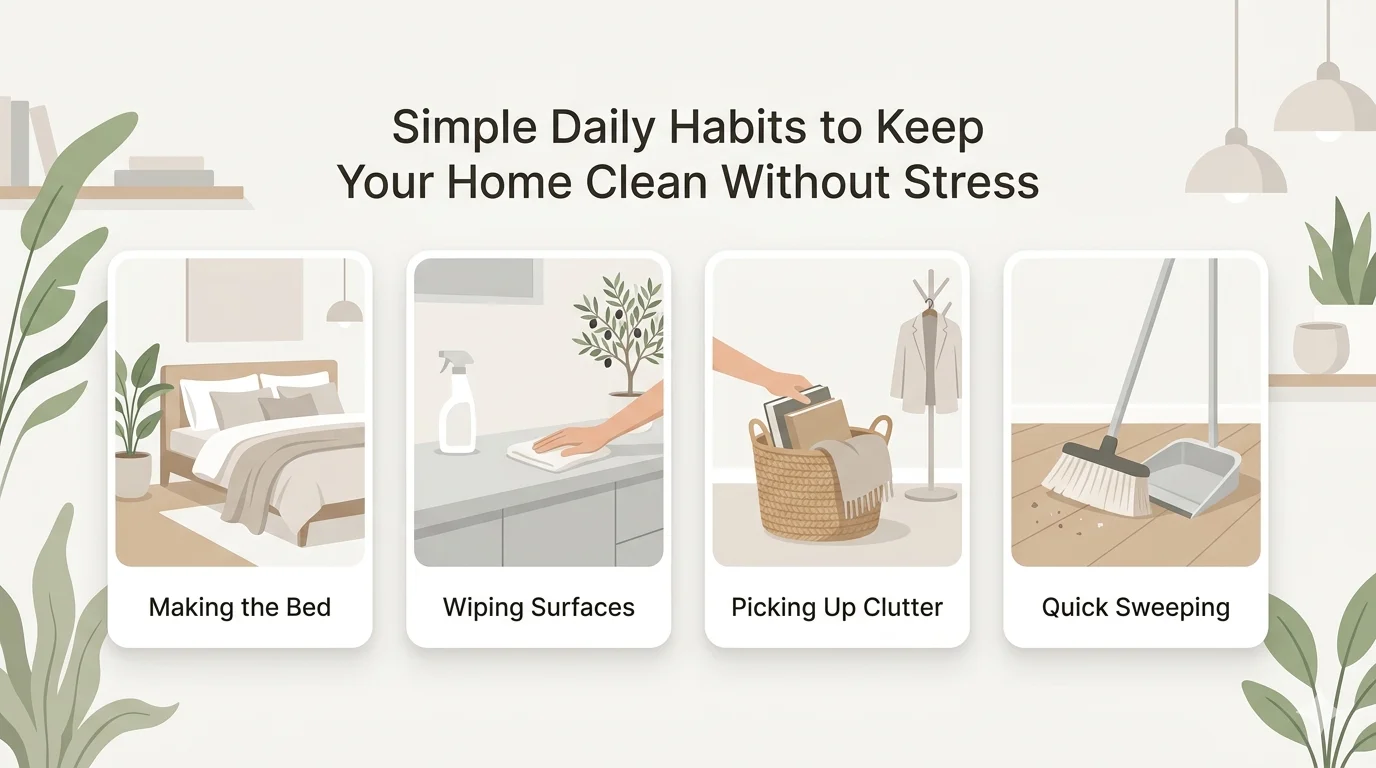
Keeping your home clean doesn’t require long, exhausting cleaning sessions. In fact, the most effective approach is to build simple daily habits that prevent mess from building up in the first place. A clean home isn’t about spending hours scrubbing. It’s about small daily actions that stop clutter and grime from accumulating before they become a real problem.
By focusing on small, consistent actions, you can maintain a clean and organized home without stress or overwhelm. The routines below are structured around three windows of time — morning, after meals, and evening — and together they take less than 30 minutes a day.
Morning habits that set the tone
How you start the morning shapes the rest of the day. A few targeted habits done before you leave the house (or sit down to work) create momentum and keep your home from sliding into chaos by afternoon.
Make the bed
It takes about two minutes and instantly makes the entire bedroom look put-together. More importantly, it signals that the day has started — a small act of order that sets a productive mindset. People who make their beds tend to follow through on other tasks too. It’s not superstition; it’s momentum.
Open windows for 10 minutes
Overnight, rooms accumulate moisture from breath and body heat. Opening a window for 10 minutes lets fresh air in, removes stuffiness, and improves your mood before the day fully begins. In humid climates, this also helps prevent mold from taking hold behind furniture and in corners.
Wipe kitchen counters
Thirty seconds with a damp cloth prevents crumbs from attracting ants and other pests. Crumbs left overnight are an open invitation. A quick wipe before breakfast — or immediately after — costs almost nothing and keeps the kitchen feeling clean throughout the morning.
Empty or unload the dishwasher
Starting the day with an empty dishwasher means dirty dishes from breakfast and lunch have somewhere to go. Without this, the sink becomes a holding zone, and by dinner the pile is intimidating. Unloading takes three to five minutes and prevents that pile-up entirely.
Quick bathroom wipe
Sink and mirror only — one minute maximum. A microfiber cloth kept under the sink makes this effortless. Doing this each morning keeps the bathroom presentable without ever needing a major scrub between weekly cleans.
After-meal cleanup routine
Meals are the biggest source of mess in most homes. The key principle here is: clean while it’s easy, not after it’s hardened and spread.
- Wash dishes immediately after eating, or load the dishwasher right away. The idea of letting dishes "soak" is mostly a way of avoiding the task — in reality, a few minutes of immediate cleanup beats 20 minutes of scrubbing dried food later.
- Wipe the stove and counters while the kitchen is still warm from cooking. Grease and splatter come off easily when they’re fresh. Once they cool and harden, they require real effort.
- Sweep or spot-clean the floor under the dining area. Food crumbs dropped near the table are exactly what draws ants and pests overnight. A handheld broom or quick vacuum pass takes under a minute.
Done consistently, the after-meal routine takes 5–10 minutes total. Skip it after two or three meals and you’re looking at 30 minutes or more to restore the kitchen to a usable state.
Evening wind-down routine
The evening routine is the single most impactful cleaning habit you can build. When you do it consistently, you wake up to a clean home — and that changes how the whole next day feels.
- 5-minute living room reset: Straighten cushions, fold blankets, and carry any cups or plates back to the kitchen. Don’t leave this for the morning — clutter left out overnight tends to attract more clutter.
- Quick bathroom wipe: Sink and toilet exterior only. This keeps the bathroom fresh between weekly deep cleans and means you’re never embarrassed if someone drops by unexpectedly.
- Prepare for tomorrow: Lay out clothes, pack bags, and check the calendar for the morning. This isn’t cleaning exactly, but it reduces the frantic energy of a rushed morning — and frantic mornings lead to messes that don’t get cleaned.
- Take out trash if the bag is more than half full. Don’t wait until it overflows. An overflowing bin is harder to deal with, more likely to spill, and — depending on what’s in it — starts to smell overnight.
Weekly tasks to pair with daily habits
Daily habits handle the surface-level work. But some tasks need to happen once a week to keep the home genuinely clean. The trick is to spread them across the week so no single day becomes a big cleaning day.
- Monday: Vacuum all floors — about 20 minutes for a typical home.
- Tuesday: Clean the bathroom properly — toilet, tub, and tiles — about 15 minutes.
- Wednesday: Dust surfaces, shelves, and electronics — about 10 minutes.
- Thursday: Mop kitchen and bathroom floors — about 15 minutes.
- Friday: Change bed sheets and empty all small trash cans throughout the home — about 10 minutes.
Adjust the schedule to your own routine. The point isn’t to follow this list rigidly — it’s to spread the effort across the week so weekends stay free and you’re never saving everything for one exhausting Saturday session.
How to get the whole household involved
A clean home is much easier to maintain when everyone in the household contributes. The challenge is making participation feel natural rather than like a chore imposed from above.
Age-appropriate chores for kids
Children are more capable than most parents assume. A rough guide: making the bed (age 4+), putting toys away (age 3+), wiping the table after meals (age 5+), loading the dishwasher (age 8+), and vacuuming (age 10+). Starting early builds habits that carry into adulthood.
Shared responsibility systems
A visible chore chart or rotation board takes the guesswork out of who does what. When responsibilities are clearly assigned and everyone can see them, there’s less negotiation and fewer arguments about fairness.
The 10-minute family blitz
Set a timer for 10 minutes and have everyone in the household clean at the same time. It sounds simple, and it is — but it’s surprisingly effective. With four people working, that’s 40 minutes of cleaning done in 10. It can even feel like a game, especially with younger children. The key is that everyone participates, including adults.
Leading by example
Consistent, visible habits encourage others more reliably than nagging. When children and partners see cleaning as a normal part of daily life rather than a punishment or a demand, they’re more likely to participate without being asked.
One important note: lower your standards for others’ work. A bed made imperfectly by a seven-year-old is still a bed made. Correcting or re-doing the task after them removes the incentive to try. Acknowledge the effort and let the result stand.
Why daily habits work
Consistency is more effective than occasional deep cleaning. Small daily actions reduce the total effort required over time and prevent large messes from forming in the first place. A home maintained this way rarely needs the kind of intensive weekend clean that takes hours and leaves everyone exhausted.
Common mistakes to avoid
- Trying to clean everything at once instead of spreading tasks across the week
- Ignoring small messes and letting them compound over days
- Overcomplicating routines with too many steps or products
- Skipping consistency and treating cleaning as something to catch up on rather than maintain
Keeping things simple is the key to maintaining a clean home without stress. Start with one routine — the evening reset is the highest-impact place to begin — and build from there.