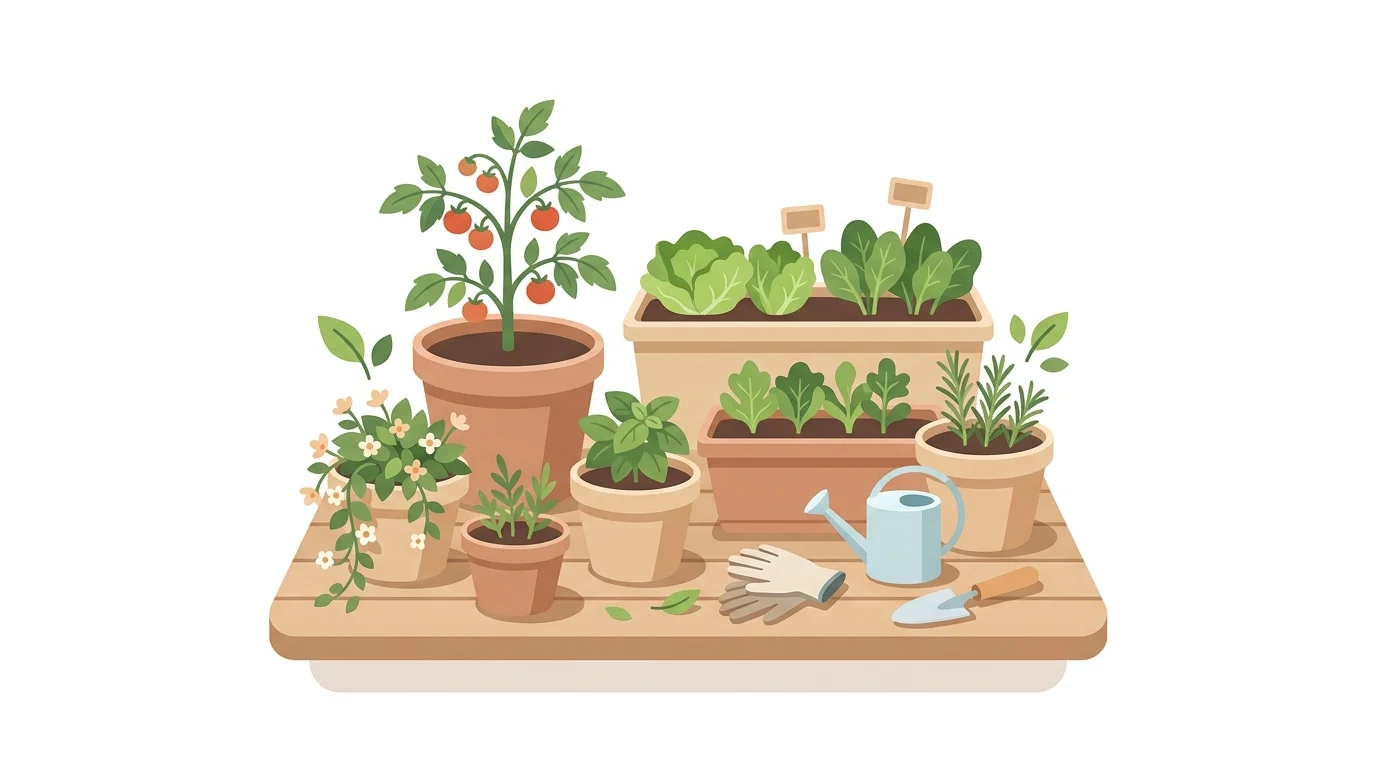
Container gardening is one of the easiest and most efficient ways to grow plants in limited space. Whether you have a small patio, balcony, or even a windowsill, containers allow you to create a productive garden without the need for a traditional yard. It is particularly well-suited to renters who cannot dig up the ground, balcony dwellers working with just a few square metres, seniors or anyone with limited mobility who benefits from raised growing surfaces, and anyone who simply wants more control over their growing environment.
With the right setup, container gardening can produce impressive results while remaining simple to manage. One of the biggest advantages is that you decide exactly what goes into your soil — no clay, no compaction, no inherited weed seeds or soil-borne diseases from a previous garden.
Why container gardening works
Containers give you full control over soil, watering, and placement. This makes it easier to create optimal growing conditions for different plants, and to adapt quickly when something is not working. You can shift a pot chasing the sun, bring a tender plant inside before a frost, or swap out a failing crop mid-season without disturbing anything else.
- Flexible placement — move pots to follow sunlight or shelter from wind
- Better soil control — custom mixes for each crop's needs
- Fewer weeds — potting mix contains far fewer weed seeds than garden soil
- Easy maintenance — watering and feeding are focused on a defined area
Choosing the right containers
The size and material of a container directly affect how well your plants grow. Choosing the right pot for the job makes everything downstream — watering, feeding, root development — much easier.
Material comparison
- Terracotta: breathable walls allow air exchange at the roots, classic look that suits any garden style, but heavy and dries out faster than other materials — good in cool or humid climates, less ideal in dry heat
- Plastic: lightweight, retains moisture well, and inexpensive — a practical choice for most vegetables; less aesthetically interesting but very functional
- Fabric grow bags: excellent drainage, air-prune roots (which prevents the circling root problems common in hard-sided pots), and fold flat for storage — ideal for tomatoes, potatoes, and root crops
- Ceramic: decorative and heavy, which adds stability in wind, but less breathable than terracotta and can crack if left outside through a hard freeze
Size guide
Match pot depth to the root system of what you are growing:
- Shallow (15–20 cm): herbs, lettuce, radishes, and spring onions — these have compact root systems and thrive in smaller containers
- Medium (25–35 cm): peppers, bush beans, most annual flowers, and compact brassicas like pak choi
- Deep (40 cm+): tomatoes, courgettes, root vegetables like carrots and parsnips, and dwarf fruit trees — roots need room to develop and the extra volume holds more water
Self-watering containers
Self-watering pots use a built-in water reservoir at the base and a wicking system that draws moisture up into the soil as the roots need it. They are ideal for busy people who cannot water every day and for hot climates where standard pots dry out within hours. Fill the reservoir every few days rather than watering from the top. Plants grown in self-watering containers often show more consistent growth because moisture levels stay stable.
Pot colour matters
Dark-coloured pots absorb heat from sunlight, which warms the root zone — beneficial in cool climates where soil temperature limits early-season growth, but potentially damaging in hot climates where roots can overheat. In hot regions, choose light-coloured or white containers to reflect heat away.
Make sure every container, regardless of material or size, has drainage holes. Without them, water pools at the base and roots rot within days.
The best potting mix for containers
Never use soil dug directly from the garden in containers. Garden soil compacts under repeated watering, dramatically reducing the air pockets that roots need to breathe. It also drains poorly in a confined space and can introduce pests, weed seeds, and fungal diseases that spread quickly in the contained environment.
A well-balanced potting mix for most vegetables and herbs contains roughly equal parts of three components:
- Peat moss or coconut coir (40%): holds moisture and provides structure; coir is the more sustainable choice, made from coconut husks rather than harvested peat bogs
- Perlite (30%): volcanic glass granules that improve drainage and keep the mix airy so roots can breathe
- Compost (30%): provides slow-release nutrients and beneficial microbial activity
Pre-mixed potting compost from a garden centre is convenient and consistent — a sensible choice if you have only a few containers. Mixing your own saves money when you are filling ten or more large pots. Buy the components in bulk and combine them in a wheelbarrow or on a tarpaulin.
At the start of each new growing season, refresh old potting mix rather than replacing it entirely. Remove the top third, break up any compacted sections, and top up with approximately 30% fresh compost plus a generous handful of perlite per pot. This restores structure and fertility without the cost of completely refilling.
Position your plants correctly
Sunlight is critical for most food crops. Most vegetables and fruiting plants need at least 6 hours of direct sun per day. Herbs and leafy greens can manage with 4 hours, making them good candidates for partially shaded spots. Place containers where they receive enough light throughout the day, and observe how sun moves across your space through the seasons — a south-facing balcony in summer may be perfect for tomatoes, but the same balcony in spring might still be mostly shaded by surrounding buildings.
One of the great advantages of containers is that you can move them easily if conditions change — chase the light, pull plants back from a heat-reflecting wall, or rotate pots so all sides receive even exposure.
Watering container plants correctly
Containers dry out 2–3 times faster than ground soil because they have limited volume and no connection to deeper moisture reserves in the earth. In summer, this can mean daily watering for smaller pots and every other day for larger ones. Developing a consistent routine is more important than any single watering technique.
Water deeply rather than shallowly. Pour water slowly until it flows freely from the drainage holes at the bottom — this ensures the entire root zone receives moisture and flushes out any salt build-up from fertilizers. Then allow the top few centimetres of soil to partially dry before watering again. This cycle of wet and partial dry encourages roots to grow downward in search of moisture.
For sensitive seedlings or herbs with shallow roots, bottom watering is a gentler technique. Place the pot in a shallow tray of water for 20–30 minutes and allow the soil to draw up moisture from below, then remove and drain. This avoids disturbing fine surface roots and reduces the risk of fungal problems on foliage.
Mulching the top of containers with a 2–3 cm layer of straw, bark chips, or even gravel significantly reduces evaporation, especially during hot spells. It also moderates soil temperature and suppresses the few weeds that do find their way in.
Timing matters too. Water in the morning so that any moisture that splashes onto foliage has time to dry before evening. Wet leaves overnight create ideal conditions for fungal diseases like powdery mildew and botrytis.
Learn to read your plants for signs of stress:
- Underwatering: wilting during the day (especially afternoon), dry and light pot when lifted, crispy leaf edges
- Overwatering: yellowing lower leaves, persistently soggy soil, fungus gnats hovering around the pot surface, and in severe cases a sour smell from the roots
Feeding container plants
Every time you water a container, small amounts of dissolved nutrients wash out through the drainage holes. After 4–6 weeks, even the best potting mix becomes significantly depleted, and plants will stall without supplementary feeding.
A liquid fertiliser applied every two weeks during the active growing season is the most responsive method — you can adjust quickly if plants show deficiencies, and the nutrients are immediately available to roots. Always dilute to the manufacturer's recommended rate; more is not better and can burn roots or push leafy growth at the expense of fruiting.
Slow-release granules are a lower-maintenance alternative. Work them into the surface of the potting mix at the start of the season and they will break down gradually over 3–6 months, depending on the product. They are a good baseline but less responsive to urgent deficiency problems mid-season.
For an organic approach, compost tea — made by steeping mature compost in water for 24–48 hours and straining — provides a gentle liquid feed and introduces beneficial microbes to the pot. Apply it monthly as a supplement rather than a primary feed.
Watch leaves for signs that plants need specific nutrients:
- Yellowing leaves (especially older, lower ones): nitrogen deficiency — apply a balanced or nitrogen-rich liquid feed
- Purple tint on leaves and stems: phosphorus deficiency — more common in cool soil; a tomato or bloom fertiliser helps
- Brown, scorched leaf edges: potassium deficiency — switch to a high-potash feed such as a tomato fertiliser
Combine plants smartly
Grouping compatible plants in one container can save space and improve efficiency. Companion planting in containers works on the same principles as in beds — basil planted alongside tomatoes is said to improve flavour and deter pests, while nasturtiums attract aphids away from more valuable crops.
- Herbs together — thyme, oregano, and rosemary share similar low-water needs
- Leafy greens mix — lettuce, spinach, and rocket can share a wide, shallow container
- Tomatoes with basil — classic combination that works in a single large pot or grow bag
Container gardening through the seasons
Containers are not just a summer pursuit. With thoughtful planning you can grow food and flowers across most of the year, even in temperate climates.
Spring
Start seeds indoors 6–8 weeks before your last expected frost date. Small pots or seed trays on a bright windowsill will do. Before moving seedlings outside permanently, harden them off gradually — set them outside in a sheltered spot for an hour on the first day, increasing the time over 7–10 days until they are spending full days outside. This acclimatises them to wind, direct sun, and cooler temperatures and dramatically reduces transplant shock.
Summer
Summer is peak growing season. Increase watering frequency as temperatures rise and check pots daily rather than every other day. Watch for signs of heat stress — drooping in the midday heat is not always underwatering; sometimes plants simply close their stomata during the hottest part of the day. If wilting persists into the evening, water immediately. For delicate crops like lettuce and spinach, afternoon shade from a larger plant or a shade cloth will prevent bolting and bitterness.
Autumn
Cool-season crops come into their own as summer fades. Kale, lettuce, spinach, and peas all thrive in containers during autumn, often producing better crops than they would in the summer heat. Start seeds in late summer so plants are established and growing vigorously before temperatures drop sharply. Move tender plants such as chillies and citrus indoors before the first frost — a frost-damaged pepper plant rarely recovers fully.
Winter
In hard-freeze climates, protect ceramic and terracotta containers by moving them into a shed or garage — water in porous materials expands when it freezes and can shatter the pot. Bring tropical plants inside to a bright room and reduce watering significantly as growth slows. Use the quieter winter months to plan next season: order seeds, note what worked and what did not, and decide if you need larger containers for any crops that felt cramped.
Common mistakes
- Using containers without drainage holes — roots will rot within days
- Overwatering or underwatering — both are among the top causes of container plant failure
- Using garden soil — it compacts, drains poorly, and introduces pests
- Overcrowding plants — plants competing for light and nutrients in the same pot underperform; follow spacing guidelines on seed packets
- Forgetting to feed — potting mix alone cannot sustain a fruiting plant through a full growing season
Avoiding these mistakes will make container gardening much easier and more productive. Most problems in container gardens come back to one of these five issues, so checking against this list whenever something looks wrong is a reliable first step.