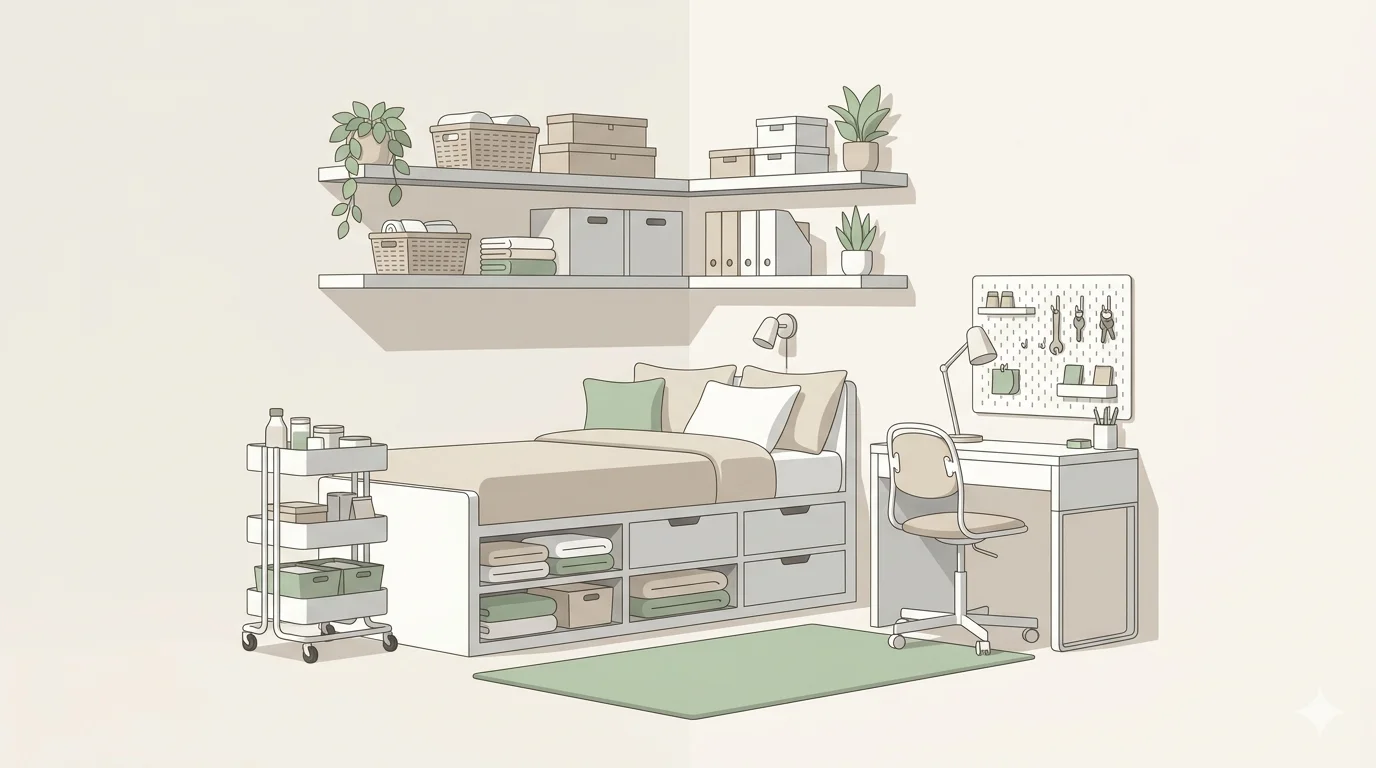
Small spaces can feel comfortable, efficient, and calm, but only when they are organized with intention. Without a clear system, even a small amount of clutter can make a room feel crowded and stressful.
The good news is that organizing a small home does not require expensive furniture or a complete redesign. In most cases, a few practical changes can make daily life much easier and help your space feel larger than it actually is.
Start by reducing visual clutter
One of the biggest challenges in a small home is visual overload. Even useful items can make a room feel messy when they are left out in the open.
Start with the surfaces you see most often: tables, counters, desks, and shelves. Remove anything that does not need to stay there every day. This simple step immediately makes a room feel cleaner.
Give every item a clear home
Organization becomes much easier when every item has a specific place. If you often leave things on a chair, countertop, or floor, that usually means they do not have a proper storage spot.
Create simple categories such as:
- Daily-use items
- Weekly-use items
- Seasonal or rarely used items
Store the most frequently used items in easy-to-reach places and move less important things higher up, lower down, or into closed storage.
Use vertical space effectively
When floor space is limited, the walls become more valuable. Vertical storage helps you keep essentials nearby without filling the room with bulky furniture.
Good vertical options include:
- Wall shelves
- Hooks for bags, coats, or tools
- Tall narrow cabinets
- Over-door organizers
Vertical solutions are especially useful in kitchens, bathrooms, entryways, and bedrooms.
Choose multi-purpose furniture
In small homes, furniture should work harder. Pieces that combine storage and function can save a surprising amount of space.
Examples include:
- Beds with drawers underneath
- Benches with hidden storage
- Ottomans that hold blankets or books
- Tables with shelves or compartments
These options reduce the need for extra storage units and help the room stay more open.
Use containers, baskets, and bins
Small loose items create clutter quickly. Grouping similar things in containers makes storage neater and easier to manage.
Clear bins are useful when you want visibility, while baskets and fabric bins can create a softer, cleaner look in living areas.
Best places to use bins:
- Bathroom supplies
- Kitchen extras
- Closet accessories
- Children’s items
- Cleaning products
Organize by zone
One of the simplest ways to keep small spaces under control is to organize each area by purpose. Instead of storing similar items all over the home, group them based on where they are actually used.
For example:
- Keep chargers and notebooks near your work area
- Store cleaning supplies close to the rooms where you use them
- Place cooking tools near food prep areas
This reduces time spent searching for things and makes your routines feel smoother.
Make closets and cabinets work better
Closets often waste space because they are not divided efficiently. Adding a few simple tools can make a major difference.
- Shelf dividers
- Stackable bins
- Drawer organizers
- Matching hangers
Even a very small closet can hold much more when the vertical and interior space is used thoughtfully.
Keep entryways simple
The entrance to your home often becomes a drop zone for shoes, bags, keys, and jackets. In small homes, this area can feel messy very quickly.
A few simple additions can help:
- A tray or bowl for keys
- A hook rail for bags and coats
- A slim shoe rack
- A small bench with storage
When the entry is organized, the whole home feels more controlled.
Create habits that prevent clutter from returning
Organization is not only about storage solutions. It also depends on daily habits. A few simple routines make it much easier to keep a small home tidy over time.
Useful habits include:
- Put items back after using them
- Do a five-minute evening reset
- Clear one surface each day
- Remove items you no longer use regularly
These small actions are more effective than waiting until clutter becomes overwhelming.
Common mistakes to avoid
- Keeping too many decorative or duplicate items
- Buying storage before understanding the problem
- Using oversized furniture in a tight room
- Leaving open shelving overcrowded
- Trying to organize without decluttering first
Small spaces work best when they are edited carefully. Simplicity is often more useful than adding more containers or furniture.
Final thoughts
A clutter-free home is not about perfection. It is about creating a space that feels easier to use and more comfortable to live in every day.
When you focus on practical storage, clear zones, and simple daily habits, even a small home can feel calm, functional, and well-organized.