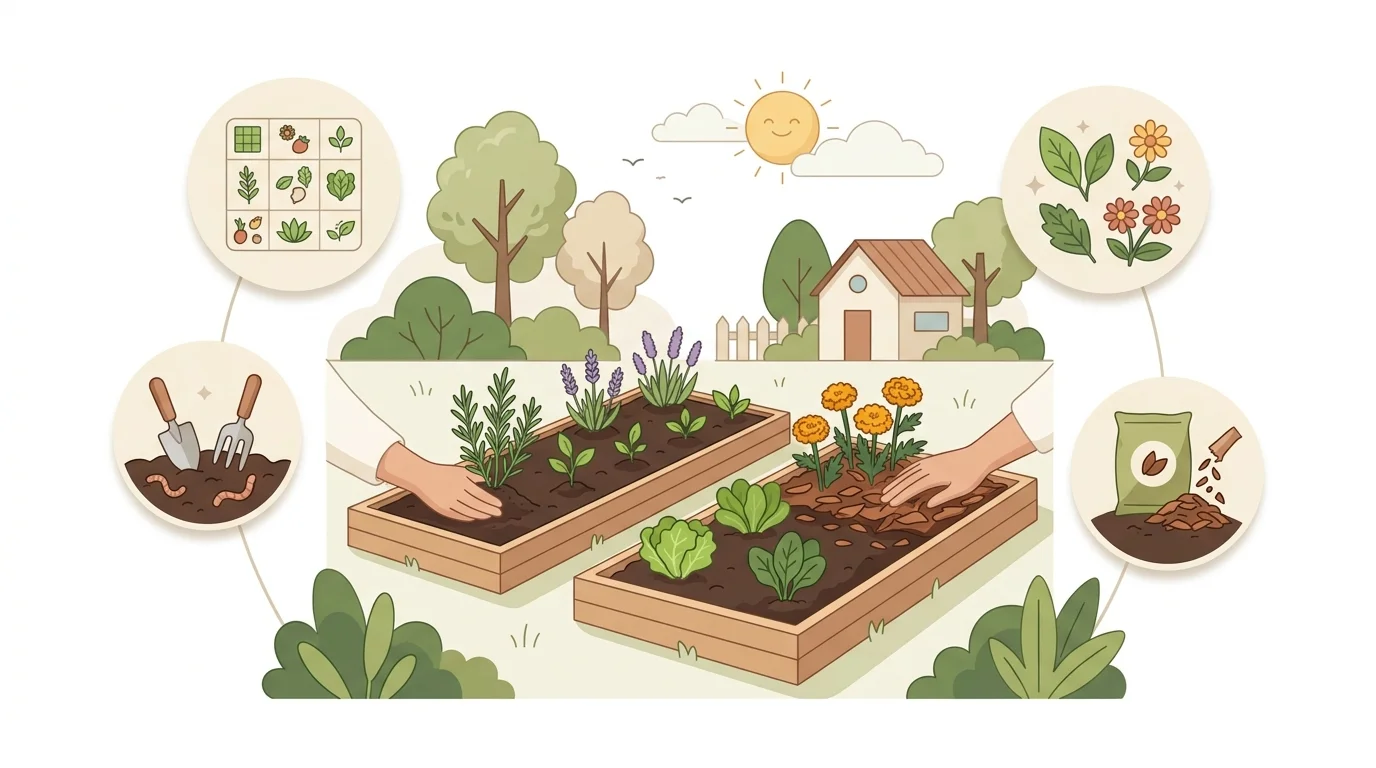
Many people want a garden but feel overwhelmed by the thought of maintenance. The good news is that a well-planned garden can look beautiful with just 2–3 hours of care per week. Starting a backyard garden doesn't have to mean hours of daily work. With the right setup, you can create a low-maintenance garden that stays productive, looks clean, and requires minimal effort throughout the season.
The goal is to design your garden in a way that reduces repetitive tasks like watering, weeding, and constant adjustments. The strategies below — from plant selection to smart irrigation — work together so that each hour you spend in the garden goes further.
1. Start with a simple layout
A complicated garden plan often leads to more work. Instead, choose a clean and structured layout with clear zones.
- One main planting area
- Clear walking paths
- Defined borders or beds
This keeps maintenance predictable and manageable.
2. Use raised beds or containers
Raised beds and containers help control soil quality and reduce weeds. They also make watering more efficient.
This is one of the easiest ways to simplify long-term garden care.
3. Choose low-maintenance plants
Some plants require constant attention, while others grow with minimal input.
- Herbs like mint and basil
- Leafy greens
- Cherry tomatoes
- Peppers
These plants are resilient and forgiving, making them ideal for beginners.
4. Improve soil before planting
Good soil reduces the need for constant fertilizing and watering adjustments.
Add compost and organic matter early to create a strong foundation.
5. Add mulch to reduce work
Mulch is one of the most effective tools for low-maintenance gardening.
- Prevents weeds
- Keeps moisture in the soil
- Improves soil over time
6. Water efficiently
Instead of frequent watering, focus on deep and consistent watering.
Using watering systems or scheduled watering times helps reduce effort.
7. Avoid overcrowding
Too many plants increase maintenance. Give each plant enough space to grow properly.
This improves airflow and reduces disease risk.
8. Keep tools and layout simple
You don't need complex equipment. A few reliable tools are enough for most tasks.
Common mistakes to avoid
- Planting too much at once
- Ignoring soil quality
- Skipping mulch
- Overwatering
Keeping things simple is the key to maintaining a garden without stress.
Choosing low-maintenance plants
The single biggest factor in how much time you spend gardening is your plant selection. Choose plants that suit your climate and soil, and maintenance practically takes care of itself.
Start with native plants
Native plants are already adapted to your local climate, rainfall patterns, and soil type. That adaptation means they need less supplemental water, little to no fertilizer, and far fewer interventions for pests or disease. A native meadow planting, for example, can thrive on rainfall alone once established — no irrigation system required.
Perennials vs annuals
Annuals need to be replanted every year, which adds cost and labor. Perennials, by contrast, die back in winter and return in spring from the same root system. Plant them once and they reward you for years. Over time, many perennials also spread and fill in gaps, which crowds out weeds naturally.
Drought-tolerant favorites
These plants handle dry spells without extra intervention and look good doing it:
- Lavender — fragrant, pollinator magnet, thrives in poor dry soil
- Sedum — succulent foliage, survives drought and neglect
- Ornamental grasses — striking movement, almost zero care once established
- Coneflowers (Echinacea) — tough, self-seeds, attracts birds and bees
- Russian sage — silvery foliage, purple flowers, needs almost no water after the first season
Ground covers instead of grass
Lawn grass is arguably the most labor-intensive plant in any garden. Replacing portions of it with ground covers can cut maintenance dramatically. Good options include:
- Creeping thyme — stays low, releases a fragrant scent when walked on, and flowers in summer
- White clover — fixes nitrogen back into the soil, reducing fertilizer needs
- Moss — perfect for shaded, damp areas where grass struggles anyway
Evergreen shrubs for structure
A garden built around evergreen shrubs looks tidy year-round with minimal pruning — typically just one light trim per year. They provide visual structure in winter when everything else has died back, making the garden feel intentional rather than neglected.
Smart design to reduce maintenance
Good plant choices only go so far. The layout of your garden determines how much effort those plants will actually demand from you week to week.
Hydrozoning
Group plants with similar water needs together in the same bed. This approach — called hydrozoning — means you water each zone at the right amount without over-watering drought-tolerant plants or under-watering thirsty ones. It sounds simple, but most garden problems (root rot, wilting, disease) trace back to water mismatches caused by mixing plants with different needs.
Minimize lawn area
Grass is the highest-maintenance element in any garden. It needs regular mowing, feeding, edging, and seasonal treatment. Shrinking the lawn by even 30% and replacing it with planting beds or gravel areas can cut your weekly garden time in half.
Use defined borders
Without a physical barrier, grass and weeds creep into planting beds over time. Stone edging, steel strips, or concrete borders create a clean line that prevents this and also makes mowing neater. The initial installation takes a few hours but saves significant time every season afterward.
Raised beds vs in-ground planting
Raised beds offer several practical advantages for low-maintenance gardening: the soil drains better, weeds are easier to spot and pull, and you don't need to bend as far. A raised bed at 45–60 cm height virtually eliminates the need to kneel. They also warm up faster in spring, extending your growing season.
Wide paths between beds
Paths that are at least 60–90 cm wide allow comfortable access with a wheelbarrow, make mowing between beds straightforward, and reduce the chance of accidentally stepping on plants. Narrow paths are a false economy — they save a little space but create friction every time you work in the garden.
Mulching — the biggest time saver
If there is one thing that separates a high-maintenance garden from a low-maintenance one, it is mulch. A proper mulch layer works while you sleep, tackling three of the most repetitive garden tasks simultaneously.
Types of mulch
- Wood chips — long-lasting, breaks down slowly and feeds soil biology, best for ornamental beds and around shrubs
- Straw — lightweight and easy to apply, excellent for vegetable gardens, breaks down in a single season
- Gravel or pebbles — permanent, never needs replenishing, ideal for Mediterranean-style plantings and drought-tolerant schemes
- Shredded leaves — completely free if you have deciduous trees, nutrient-rich, and breaks down to improve soil structure
How to apply mulch correctly
Apply mulch 5–10 cm deep across the entire bed surface. Keep it at least 5 cm away from plant stems and tree trunks — contact with stems traps moisture and can cause rot. Spread it to the drip line of trees and shrubs for best effect.
What mulch actually does
A proper mulch layer suppresses roughly 90% of weed germination by blocking sunlight from reaching weed seeds. It also retains soil moisture, reducing how often you need to water by around 50% in summer. In winter, it acts as an insulating blanket that moderates soil temperature, protecting roots from freeze-thaw cycles.
Reapply wood chip mulch once per year in spring before the growing season. Shredded leaf mulch breaks down faster, so top it up twice a year — once in spring and once in autumn.
Irrigation that works for you
Dragging a hose around the garden every few days is one of the most time-consuming garden tasks. The right irrigation setup removes that chore almost entirely.
Drip irrigation
Drip systems deliver water slowly and directly to the root zone of each plant through small emitters. Because the water goes where it is needed and not onto leaves or pathways, disease pressure drops and water use is highly efficient. Connect a drip system to a simple timer and it runs automatically without any involvement from you.
Soaker hoses
Soaker hoses are a budget-friendly alternative to drip irrigation. They are porous hoses that seep water slowly along their entire length. Lay them under your mulch layer and connect them to a timer. They are less precise than drip emitters but work well for vegetable rows and dense planting beds.
Rain barrels
Connecting a rain barrel to your roof downspout collects free water during storms. A single heavy rain event can fill a 200-litre barrel completely. Position the barrel on a raised platform so gravity provides enough pressure to fill a watering can or connect a soaker hose. During a wet spring, a barrel can cover most of your watering needs at zero cost.
Simple timer systems
A basic outdoor tap timer connects between your outdoor faucet and hose in minutes. Set your watering schedule once — time of day, duration, frequency — and forget about it. Quality tap timers cost around $25–40 and can last for several seasons. Some models include a rain sensor that skips scheduled watering when it has recently rained, saving even more water.
Seasonal maintenance calendar
One reason gardens feel overwhelming is the assumption that they need constant attention. In reality, most of the work comes in short, concentrated bursts at the start and end of each season, with very little needed in between.
Spring (2–3 hours total)
- Clear winter debris and cut back any perennials left standing for wildlife
- Apply a fresh layer of mulch before weeds get established
- Divide overgrown perennials that have spread beyond their space
- Check irrigation connections and replace any cracked soaker hoses or blocked emitters
Summer (1–2 hours per week)
- Water during dry spells if your irrigation timer is not covering it
- Deadhead flowering perennials to extend the bloom period
- Pull the small number of weeds that make it through the mulch layer before they set seed
Fall (2–3 hours total)
- Cut back spent perennials, or leave some standing for bird habitat and winter structure
- Collect fallen leaves and shred them for use as free mulch
- Plant spring bulbs — tulips, daffodils, alliums — for color next year with almost no effort
Winter (minimal)
- Plan any improvements or new beds for the following year
- Sharpen and clean tools so they are ready when spring arrives
- Order seeds and bare-root plants early for better selection and lower prices
Across an entire year, this approach amounts to perhaps 30–40 hours of garden work — less than one hour per week on average. That is a garden that fits comfortably into a busy life without sacrificing how it looks or produces.