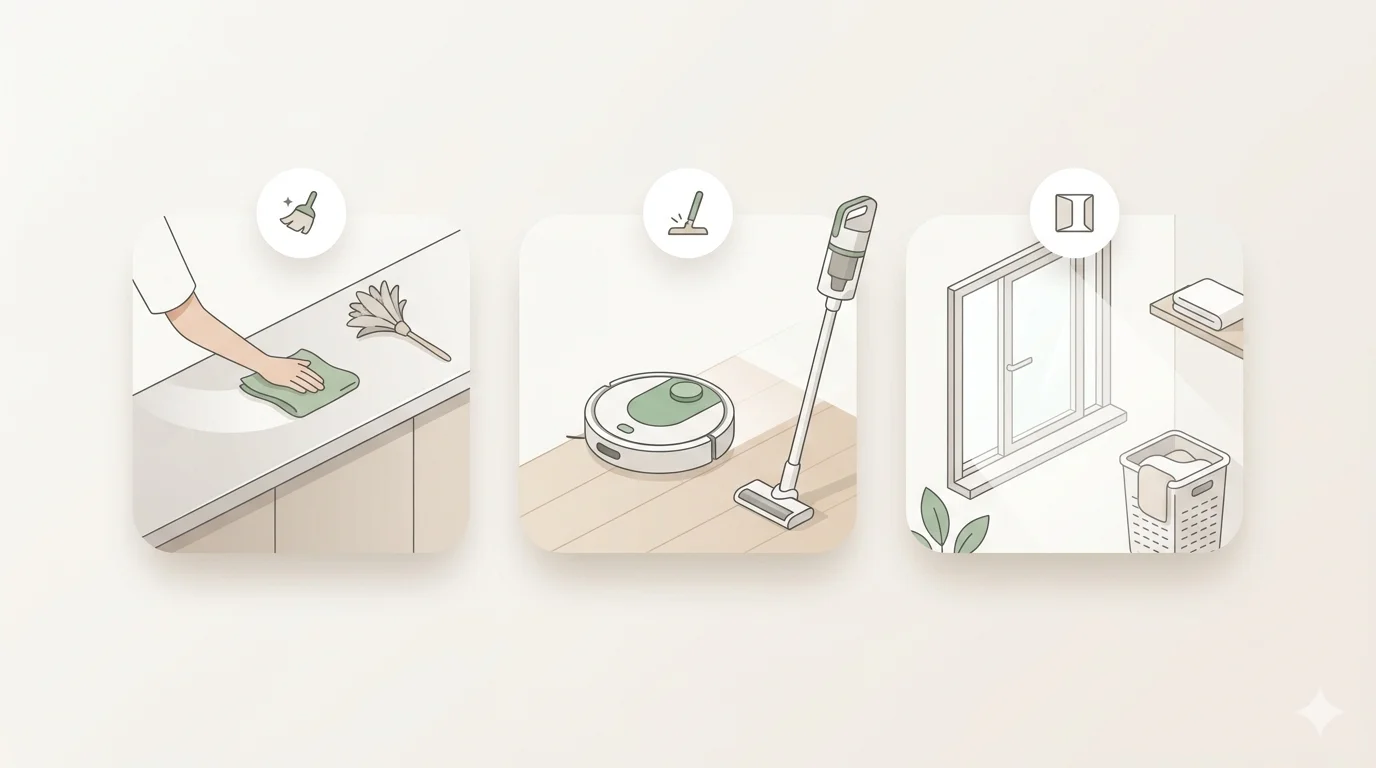
Keeping a home clean while managing a busy schedule can feel overwhelming. Long cleaning sessions are difficult to maintain, and clutter tends to build up quickly when daily routines are inconsistent. But cleaning doesn’t have to be exhausting. The key is small routines that prevent messes from building up in the first place — 15 minutes of consistent daily effort beats a grueling 3-hour session every weekend.
A low-effort cleaning routine focuses on simple, repeatable actions that prevent mess from accumulating. Instead of deep cleaning all at once, you maintain your home with small daily and weekly habits that barely register as "cleaning" at all. Over time, these micro-habits keep your home at a baseline level of tidiness that’s easy to sustain and never lets things spiral out of control.
Why traditional cleaning routines fail
Many cleaning plans fail because they rely on large blocks of time — the "I’ll do it all on Saturday" approach. When life gets busy, those big sessions get skipped, mess compounds, and the next cleaning session feels even more daunting. This creates a cycle of avoidance and overwhelm that most people never escape.
A better approach is to reduce the workload by spreading tasks across the week and keeping each session short enough that you can’t reasonably talk yourself out of it. Five minutes is hard to say no to. Three hours is easy to postpone indefinitely.
The core idea: small tasks, done consistently
The most effective cleaning systems rely on consistency, not intensity. A few minutes of daily effort can replace hours of weekend cleaning. The goal isn’t to get everything spotless — it’s to keep things from getting bad enough that they demand a major intervention. Think of it like financial maintenance: small regular deposits beat scrambling to recover from a crisis.
The 15-minute daily routine
The whole system runs on about 15 minutes a day, split into three natural moments: morning, after meals, and evening.
Morning (5 minutes)
Start with the bedroom: make the bed. It takes two minutes and immediately makes the room look put together. Then move to the bathroom — wipe the sink and counter with a damp cloth. These two surfaces collect toothpaste, water spots, and product residue daily, and a 60-second wipe prevents the buildup that turns into a scrubbing job. Finish with a quick visual check of the kitchen: are there dishes in the sink, anything left out from the night before? If so, deal with it now while you have momentum.
After meals (5 minutes)
The kitchen is the highest-traffic mess generator in most homes. The habit that makes the biggest difference: deal with dishes immediately after eating. Rinse them or load the dishwasher — don’t leave them to soak "for a few minutes" (which always turns into hours). Then wipe the counters and stove with a damp cloth. Food residue that’s fresh takes seconds to wipe off; dried-on residue takes real effort. This single habit prevents 80% of kitchen mess.
Evening (5 minutes)
The nightly living room reset is one of the highest-impact habits you can build. Spend five minutes before bed: fluff and return pillows to the couch, fold any blankets, gather remotes and chargers to their designated spots, and set out anything you need for tomorrow. Waking up to a reset, tidy space changes how the whole next day starts. It takes less than five minutes and it’s far easier to do it nightly than to face a week’s worth of drift all at once.
Why this works: small consistent effort maintains a baseline of cleanliness that prevents the overwhelming "deep clean" cycle. You’re not spending more total time cleaning — you’re distributing it so it never feels like a big deal.
Room-by-room low-effort strategies
Kitchen
The best kitchen habit is cleaning as you cook. While something is on the stove simmering, wash the prep bowls and cutting boards you’ve already used. You’ll finish cooking with fewer dishes and a cleaner workspace. Apply the one-in-one-out rule to countertop items: if a new appliance or gadget comes out, something else goes away. Countertop clutter accumulates silently and makes even a clean kitchen feel chaotic. Once a week, do a quick 5-minute fridge audit: toss anything expired, wipe any obvious spills off the shelves. It takes almost no time and prevents the situation where the fridge becomes something you dread opening.
Bathroom
After every shower, take 10 seconds to squeegee the glass. This single habit prevents roughly 90% of soap scum and hard water buildup — the stuff that otherwise requires serious scrubbing to remove. Keep a spray bottle of daily shower cleaner in the bathroom so there’s no friction: spray, squeegee, done. For the toilet, a weekly 3-minute clean is all it takes if you’re doing it consistently. Let a toilet bowl cleaner sit while you wipe the exterior and tank, then scrub the bowl — the whole thing is done before the 3 minutes are up.
Bedroom
The bedroom has one main enemy: the chair. You know the one — where clothes go that are "not dirty enough to wash but not clean enough to put away." The fix is simple but requires commitment: dirty clothes go directly to the hamper, every time, no exceptions. If you’re not ready to wash something, hang it back up. Pick a set day each week for changing sheets — Sunday or Monday works well for most people — and stick to it so it becomes automatic. Before sleep, spend two minutes clearing the nightstand: glasses, books, chargers, anything that’s accumulated. It takes almost no effort and has an outsized effect on how calm the room feels.
Living room
The living room benefits most from the nightly 5-minute reset described above. Beyond that, two simple systems make a big difference. A blanket basket — any basket or bin that’s easy to grab from — lets you toss throws in there quickly so the room looks tidy without folding anything. And dedicated spots for remotes and chargers (a small tray on the coffee table works well) mean they never disappear into the couch cushions.
Cleaning supplies that save time
The right tools make a real difference. More products don’t mean more cleanliness — they just mean more decisions and more storage problems.
- Microfiber cloths: One product that replaces paper towels, dusters, and glass cleaner. Microfiber works with just water on most surfaces — counters, mirrors, TV screens, appliances — and leaves no lint or streaks. Wash and reuse indefinitely.
- One good all-purpose spray: Simplify your cleaning cabinet to a single spray that works on kitchen surfaces, bathroom counters, and general messes. Fewer products mean faster decisions and less under-sink clutter.
- Robotic vacuum: If there’s one cleaning investment worth making, it’s this. A robotic vacuum running daily while you’re out or asleep handles 80% of floor cleaning automatically. You still need to mop occasionally and do corners, but the daily dust and debris that accumulates on floors is handled without any effort from you.
- Dishwasher tips: Run it every evening when it’s full rather than waiting until it’s overflowing. Modern dishwashers don’t need pre-rinsing — scrape off food scraps and load directly. Pre-rinsing is a habit from older machines that wastes time and water.
How to build the cleaning habit
Knowing what to do and actually doing it consistently are different challenges. Here’s how to make these routines stick:
- Start with one routine only. Pick the one that would make the biggest difference — making your bed every morning is a popular choice — and do just that for two weeks. Don’t overhaul your entire cleaning system at once. One habit established is worth more than five habits attempted and abandoned.
- Stack habits onto existing routines. Attach cleaning actions to things you already do reliably. Wipe the counter while your coffee brews. Clean the bathroom sink right after brushing your teeth. Rinse your dish while the microwave runs. No new "cleaning time" required — you’re just using existing gaps.
- Add one new habit every two weeks. After the first habit is solid, layer in a second. Two weeks later, a third. Slow progression builds a complete routine over a couple of months without ever feeling overwhelming.
- Don’t aim for perfect. A partially cleaned kitchen is better than a dirty one. "Better than yesterday" is the actual goal — not a spotless showroom. Perfectionism is what causes people to give up entirely when they miss a day.
- Track with a simple fridge checklist for the first month. A physical checklist on the fridge makes habits visible and gives you a small win each time you check something off. After 30 days, the habits are usually automatic enough that the list isn’t needed anymore.
Daily 5–10 minute routine summary
1. Reset main surfaces
Clear and wipe down key areas like kitchen counters, tables, and desks. These surfaces affect how clean your home feels more than almost anything else. A cluttered counter makes a clean kitchen look dirty; a clear counter makes a slightly messy kitchen look fine.
2. Put items back in place
Returning items to their designated spots after use prevents clutter from spreading and keeps spaces functional. This only works if everything has a designated spot — so if something doesn’t have a home, find one for it.
3. Quick floor check
Pick up visible debris or do a quick sweep in high-traffic areas. If you have a robotic vacuum, this step handles itself. If not, a 2-minute sweep of the kitchen and entryway is usually enough.
4. Manage dishes immediately
Keeping the sink clear is one of the most impactful things you can do for kitchen cleanliness. A pile of dishes in the sink makes the entire kitchen feel chaotic, even if everything else is clean. Rinse and load after every meal.
Weekly light routine
Instead of cleaning everything in one overwhelming day, distribute tasks across the week so each session stays short:
- One day for bathroom cleaning (toilet, sink, mirror, floor)
- One day for floors (vacuum or mop, depending on surface)
- One day for dusting (microfiber cloth, top to bottom)
- One day for laundry (wash, dry, and put away same day)
Each of these takes 15–30 minutes when done weekly. Skip a week and they start to feel like real work again. Consistency is what keeps them small.
Common mistakes to avoid
- Trying to clean everything at once — it leads to burnout and avoidance
- Skipping daily maintenance and letting small messes compound
- Using too many products, which creates decision fatigue and storage clutter
- Letting clutter build up without a regular reset habit
- Setting unrealistic standards that make you feel like you’re failing when you’re actually doing fine
Keeping the routine simple ensures that it actually works long-term. The best cleaning routine is the one you’ll actually follow, not the most comprehensive one.
Final thoughts
A clean home doesn’t require perfection or large amounts of time. It requires consistency and a system that fits your actual lifestyle — not an idealized version of it. Start with one habit, stack another onto it a couple weeks later, and trust that small daily actions compound into a genuinely well-maintained home.
By focusing on high-impact areas, using the right tools, and building habits that attach to your existing daily moments, you can maintain a clean, comfortable home without dedicating your weekends to scrubbing. The 15 minutes a day approach isn’t a shortcut — it’s actually a smarter, more sustainable way to handle a task that isn’t going away.