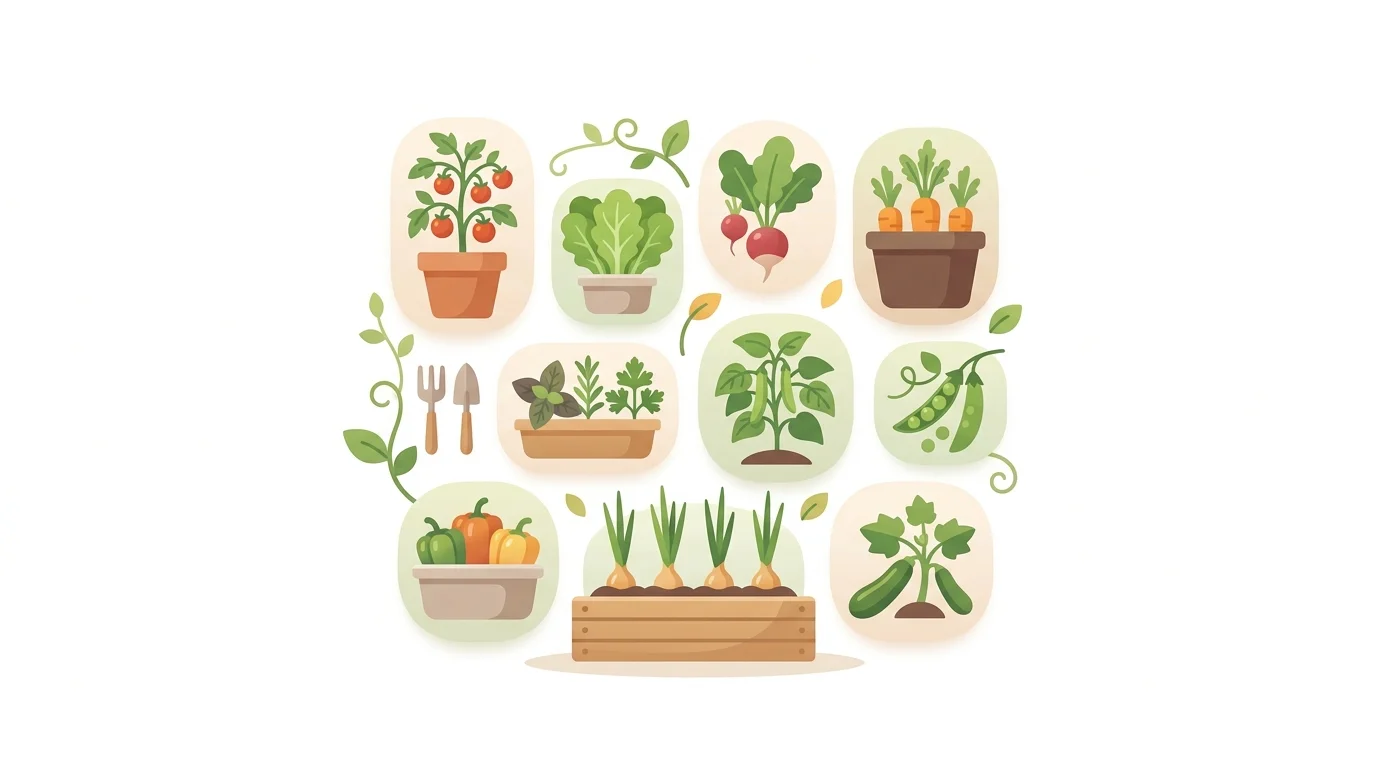
Starting a small garden doesn’t require a large backyard or advanced skills. Many vegetables grow extremely well in compact spaces like balconies, patios, or even windowsills. Container vegetable gardening has exploded in popularity over the past decade as more people move into apartments and smaller homes — and discover that a single square metre of outdoor space is genuinely enough to grow real food.
Growing your own vegetables saves money: a single packet of lettuce seeds costing under £2 can yield dozens of harvests worth far more at the supermarket. You also control exactly what goes on your food — no pesticide residues, no wax coatings, no week-old produce that lost its nutrients in transit. There is also something quietly satisfying about eating a meal where the salad came off your windowsill that same morning.
If you’re new to gardening, choosing easy and forgiving plants will help you build confidence while still getting great results. A 1m² balcony can comfortably hold four to six medium pots, which is enough to keep a household in salad leaves and herbs throughout the growing season. The ten vegetables below were chosen because they perform reliably in containers, forgive occasional missed waterings, and reward beginners with a visible harvest quickly.
1. Lettuce
Lettuce is arguably the perfect beginner vegetable — it grows fast, tolerates shade better than almost anything else, and can be harvested leaf by leaf so one plant lasts for months. Look for cut-and-come-again varieties such as ‘Salad Bowl’, ‘Lollo Rosso’, or ‘Oak Leaf’; these are specifically bred to keep producing new leaves after you pick. A pot as small as 20 cm wide and 15 cm deep is enough for three or four plants. Lettuce needs only 4–5 hours of sunlight per day, making it ideal for partly shaded balconies, and it reaches harvest size in just 45–60 days from sowing. The key tip: sow a few seeds every two weeks so you always have a fresh batch coming through rather than a glut all at once.
2. Radishes
Radishes are one of the fastest-growing vegetables in existence, which makes them deeply satisfying for anyone who has never grown food before. Varieties like ‘Cherry Belle’ and ‘French Breakfast’ go from seed to table in as little as 22–28 days. They fit happily into any container at least 15 cm deep, so even a repurposed tin or old colander works. Radishes prefer 6 hours of sun and cool temperatures — they bolt and turn woody in strong summer heat, so they are best sown in spring or autumn. The practical tip here is to thin seedlings ruthlessly to about 5 cm apart; overcrowded radishes produce all tops and no root.
3. Spinach
Spinach is a cool-season powerhouse that works great in small pots or raised beds, and it is particularly valuable because it thrives when summer crops haven’t yet started. ‘Perpetual Spinach’ (also called leaf beet) is more heat-tolerant than true spinach and keeps producing through summer without bolting. A pot 25 cm wide and 20 cm deep suits three to four plants well. Spinach manages with 4–5 hours of sunlight, which makes it one of the few vegetables that does reasonably well on a north-facing balcony. Harvest outer leaves when they reach 8–10 cm and the plant will keep regenerating for 8–12 weeks.
4. Cherry tomatoes
Compact tomato varieties thrive in containers and produce a steady harvest throughout the season, often outperforming garden-grown plants because containers warm up faster in spring. ‘Tumbling Tom Red’, ‘Balcony Yellow’, and ‘Maskotka’ are all bred specifically for pots and hanging baskets — they trail attractively and need minimal staking. Use a container of at least 30 cm in diameter and 30 cm deep, filled with good quality potting compost. Cherry tomatoes need 6–8 hours of full sun and take around 60–70 days from transplanting to first harvest. Water deeply and consistently: irregular watering is the main cause of blossom end rot and cracked fruit in container-grown tomatoes.
5. Green onions
Green onions (also called scallions or spring onions) are one of the most space-efficient crops you can grow because they are planted densely and harvested young. The variety ‘White Lisbon’ is a reliable choice for containers. A pot 15 cm deep is plenty, and you can fit 20–30 seeds in a 30 cm wide container. They need 6 hours of sun and are ready to pull in just 60–70 days. The cleverest trick with green onions is the regrow method: after cutting, place the white root ends in a glass of water on your windowsill and they will regrow usable leaves within a week, giving you a free second harvest.
6. Peppers
Peppers grow well in containers and don’t require much space, especially smaller varieties — a single plant in a 25–30 cm pot can produce 20 or more fruits over a season. ‘Mini Bell Mix’ and ‘Snack Sweet’ are both compact varieties suited to balcony growing, while ‘Cayenne’ is a reliable choice if you want a little heat. Peppers love warmth and need at least 6–8 hours of sun per day; they are slow starters, taking 70–90 days from transplanting, but the harvest stretches right through summer. Because they come from warm climates, peppers benefit enormously from being placed against a south-facing wall that reflects and retains heat.
7. Herbs (basil, parsley, mint)
While technically herbs rather than vegetables, basil, parsley, and mint are essential additions for beginners and grow easily in small containers — often on a kitchen windowsill. Basil pairs brilliantly with tomatoes both on the plate and in the pot (companion planting studies suggest it may deter aphids). Parsley is slow to germinate but then grows steadily for months. Mint is extremely vigorous — keep it in its own pot to prevent it from taking over. A 15 cm pot per herb is sufficient; all three need 4–6 hours of light. Pinch out basil flower heads as soon as they appear to keep the plant bushy and producing leaves rather than setting seed.
8. Carrots (short varieties)
Compact carrot types can grow in pots as shallow as 30 cm and still produce satisfying yields. Standard-length carrots need deep soil, but varieties like ‘Chantenay Red Cored’, ‘Paris Market’, and ‘Parmex’ (a round ball-shaped carrot) are specifically bred for container depth constraints. Use a light, sandy potting mix — heavy compost causes forked and distorted roots. Carrots prefer 6 hours of sun and take 70–80 days to mature. The most important tip is to sow seeds thinly and thin to 5 cm apart once seedlings appear; skipping the thinning step is the single biggest reason beginner carrot crops disappoint.
9. Bush beans
Unlike climbing beans, bush beans stay compact at 40–50 cm tall and are perfect for small spaces where you can’t install a trellis. ‘Contender’, ‘Tendercrop’, and ‘Provider’ are all excellent container varieties that produce abundantly without any support. A 30 cm pot holds three or four plants comfortably. Bush beans need a solid 6–8 hours of sun and take 50–60 days from direct sowing to harvest. They fix nitrogen in the soil, which improves compost quality for the next crop you grow in the same container — making them a smart choice in a rotation plan.
10. Zucchini (compact types)
Some modern zucchini varieties are designed specifically for container gardening and small patios, making what was once a sprawling garden plant genuinely manageable on a balcony. ‘Patio Star’, ‘Eight Ball’, and ‘Astia’ are all compact bush types that stay under 60 cm wide. You will need a large container — at least 40–50 cm in diameter and 30 cm deep — and full sun of 7–8 hours. Zucchini are heavy feeders, so fertilise every two weeks once flowering starts. Harvest fruits when they are 10–15 cm long rather than letting them balloon: smaller zucchini taste better and keeping them picked encourages the plant to produce more.
Tips for success
Getting a few basics right makes the difference between a thriving container garden and a frustrating one. None of these principles are complicated, but together they have an outsized effect on your results.
Soil: Always use a quality potting mix in containers — never garden soil or topsoil. Garden soil compacts in pots, drains poorly, and suffocates roots. A good potting mix is light, free-draining, and usually contains perlite or vermiculite to improve aeration. You can also mix in 20–25% compost to improve nutrient content and water retention.
Watering: The most reliable way to check if a container needs water is the finger test: push your finger 2 cm into the soil. If it feels dry at that depth, water thoroughly until water runs out of the drainage holes. If it still feels moist, leave it for another day. Morning watering is best — it gives leaves time to dry before evening, reducing the risk of fungal disease. Keep in mind that containers dry out significantly faster than ground soil, especially in hot or windy weather; during a summer heatwave, large pots may need daily watering.
Sunlight: Most fruiting vegetables (tomatoes, peppers, beans) need 6–8 hours of direct sun per day. Leafy greens like lettuce and spinach can manage with 4–5 hours, which gives you more flexibility on shadier balconies. If your space is darker than ideal, try positioning pots against a light-coloured wall or placing a piece of white-painted board nearby — reflective surfaces can meaningfully boost available light.
Feeding: Potting mix nutrients are depleted after 4–6 weeks of active growth. Supplement with a liquid fertiliser every two weeks during the growing season — a balanced tomato feed works well for fruiting crops, while a high-nitrogen liquid feed suits leafy greens. If you prefer a lower-maintenance approach, mix slow-release fertiliser granules into the compost at planting time; they break down gradually over 3–6 months and reduce the need for regular liquid feeding.
Planning your container garden
Before you buy 10 types of seeds and a stack of pots, take a moment to plan. Start with just 2–3 plants. Mastering a small selection builds real skill and confidence far faster than trying to manage many different crops at once. Lettuce, cherry tomatoes, and basil is a classic beginner trio — they complement each other in the kitchen and all have slightly different care needs, which teaches you a lot in one season.
Companion planting works in containers too. Tomatoes and basil are the classic pairing: they share space efficiently, the basil stays smaller under the tomato canopy, and many gardeners report fewer aphid problems when the two are grown together. Marigolds planted near any vegetable help deter whitefly, and their bright flowers attract pollinators that improve yields on beans and peppers.
Succession planting is a simple technique that prevents the feast- or-famine problem most beginners encounter. Instead of sowing an entire packet of radish or lettuce seeds at once, sow a small amount every two to three weeks. This staggers the harvest so you get a steady supply of fresh produce rather than more lettuce than you can eat in one week and nothing the next.
Think about seasonal rotation too. Cool-season crops — lettuce, spinach, radishes, and carrots — grow best in spring and autumn when temperatures sit between 10°C and 20°C. When summer arrives and those crops bolt in the heat, replace them with warm-season plants like tomatoes, peppers, and zucchini that love the same conditions that make cool-season crops fail. Rotating through the seasons means your containers are productive for 8–9 months of the year rather than just summer.
Common beginner mistakes
Almost every gardener makes the same mistakes in their first season. Knowing about them in advance does not guarantee you will avoid all of them, but it does mean you can diagnose problems faster and recover more quickly.
- Overwatering. This is the number one killer of container plants, not underwatering. Roots sitting in permanently wet compost rot within days. Always use the finger test before watering and never water on a schedule alone — water when the plant needs it, not when the calendar says so.
- Too little drainage. Every container must have drainage holes. A beautiful pot without holes will drown your plants even if you water carefully. If you love a particular decorative pot that has no holes, use it as a sleeve and place a plain nursery pot with drainage inside it.
- Starting too many varieties at once. It is tempting to try everything in year one. Resist. A small number of well-tended plants will outperform a large number of neglected ones every time.
- Using containers that are too small. Root-bound plants stop growing, dry out extremely quickly, and rarely recover fully. When in doubt, size up. A larger container also means less frequent watering.
- Giving up after the first crop fails. Every gardener loses plants — to pests, extreme weather, timing mistakes, or plain bad luck. A failed crop is not a sign that you are bad at gardening; it is data. Note what went wrong, try something small differently next time, and keep going. The gardeners who end up with thriving container gardens are simply the ones who did not quit after their first difficult season.
With the right choices, even a small space can produce a surprising amount of fresh food. Start simple, stay curious, and enjoy the process as much as the harvest.